Burn Plastic Wound Repair Surgery, The Eighth Affiliated Hospital of Xinjiang Medical University (Xinjiang Uygur Autonomous Region Burn Hospital), Urumqi, People’s Republic of China
Burn Plastic Wound Repair Surgery, The Eighth Affiliated Hospital of Xinjiang Medical University (Xinjiang Uygur Autonomous Region Burn Hospital), Urumqi, People’s Republic of China
Burn Plastic Wound Repair Surgery, The Eighth Affiliated Hospital of Xinjiang Medical University (Xinjiang Uygur Autonomous Region Burn Hospital), Urumqi, People’s Republic of China
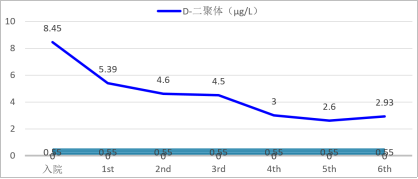
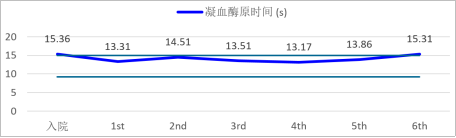
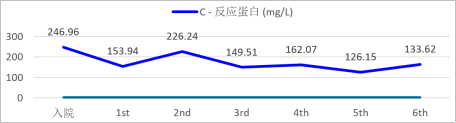
Objective: To explore the diagnostic and therapeutic strategies for a rare critical case of extensive burns complicated by Stanford Type B aortic dissection and pulmonary artery embolism, analyzing the principles for resolving treatment conflicts and clinical outcomes. Methods: A retrospective analysis was conducted on the clinical data of a 55-year-old male patient admitted in September 2024 with extensive burns and vascular complications. The patient presented with 71% total body surface area (TBSA) burns, comprising 55% third-degree and 16% second-degree burns, mainly complicated by Stanford Type B aortic dissection (chronic), distal right pulmonary artery trunk and branch embolism, and near-complete thrombosis of the left upper limb. Clinical characteristics, laboratory test dynamics, surgical approach, and anticoagulation strategy were analyzed. Results: Enhanced CT angiography confirmed the diagnosis upon admission. Addressing the treatment conflict between aortic dissection and pulmonary embolism, a strategy of “staged surgery + close monitoring + cautious low-molecular-weight heparin anticoagulation” was adopted. Specific measures: (1) Wound management: Underwent 6 surgical procedures including debridement and eschar removal, heterograft skin grafting, Meek grafting, and autograft skin grafting to progressively close the wound. (2) Aortic dissection management: Control blood pressure (target systolic 100–130 mmHg; 1 mmHg = 0.133 kPa) and heart rate (target 60–80 bpm) to prevent dissection expansion. (3) Pulmonary embolism and thrombus management: Sodium low molecular weight heparin 4250 IU subcutaneously every 12 hours, with dynamic monitoring of D-dimer and coagulation function. During treatment, D-dimer decreased from 8.45 μg/L at admission to 2.93 μg/L, and C-reactive protein decreased from 246.96 mg/L to 133.62 mg/L. At 2.5 months postoperatively, wounds on the right upper limb and both lower limbs were largely closed, with good survival of chest and back skin grafts. The patient's condition was stable. Conclusion: Large-area burns complicated by Stanford Type B aortic dissection and pulmonary embolism present a critically ill condition with prominent treatment dilemmas. Under the premise of confirming the dissection as chronic with a relatively stable false lumen, cautious anticoagulation with low molecular weight heparin combined with dynamic monitoring and staged surgical strategies can control thrombus risk while avoiding aortic dissection rupture. This case provides preliminary experience for managing such complex cases, though further clinical research is needed for validation.
This is an Open Access article, distributed under the terms of the Creative Commons Attribution 4.0 International License (http://creativecommons.org/licenses/by/4.0/), which permits unrestricted use, distribution and reproduction in any medium or format, provided the original work is properly cited.
Zhu F, Liu XB, Zhou W, Shen T, Ma QM, Wang YS, Tang WB, Li XJ, Yin X, Min DH, Li H, Zhu SH, Huang YS, Guo GH, Fu XB; Burn and Trauma Branch of the Chinese Geriatric Medical Association, and Critical Care Group of Burn Surgery Branch of the Chinese Medical Association. Chinese expert consensus on prevention, diagnosis, and management of venous thromboembolism in adult burn patients (2024). Mil Med Res. 2025 Nov 2; 12(1): 74.
Chen XG, Shi SY, Ye YY, Wang H, Yao WF, Hu L. Successful treatment of aortic dissection with pulmonary embolism: A case report. World J Clin Cases. 2022 Jun 6; 10(16): 5394-5399.
Nienaber CA, Eagle KA. Aortic dissection: new frontiers in diagnosis and management: Part I: from etiology to diagnostic strategies. Circulation. 2003 Aug 5; 108(5): 628-35.
Nienaber CA, Eagle KA. Aortic dissection: new frontiers in diagnosis and management: Part I: from etiology to diagnostic strategies. Circulation. 2003 Aug 5; 108(5): 628-35.
患者男,55岁,工人,于2024年9月9日以“全身多处大面积烧伤后9天”为主诉转入我院。患者2024年8月31日工作时因熔炉泄露被硅金属溶液烧伤,伤后于外院重症监护病房(intensive care unit, ICU)抢救治疗,期间行四肢烧伤焦痂切开减张术,并予抗休克、抗感染、输血、补液、对症等治疗,全身情况基本稳定后转入我科进一步治疗。患者既往有高血压病史20余年,口服硝苯地平缓释片及琥珀酸美托洛尔缓释片控制血压,控制良好。
ISBI Practice Guidelines Committee; Advisory Subcommittee; Steering Subcommittee. ISBI Practice Guidelines for Burn Care, Part 2. Burns. 2018 Nov; 44(7): 1617-1706.
经多学科会诊(multi‑disciplinary team,MDT)讨论,患者的血栓相关致死风险显著高于夹层进展风险,具有明确抗凝治疗指征,在严格控制血压、心率以稳定主动脉夹层的基础上,予以谨慎抗凝治疗;具体采用低分子量肝素钠 4250 IU 每 12 小时皮下注射
[1]
Zhu F, Liu XB, Zhou W, Shen T, Ma QM, Wang YS, Tang WB, Li XJ, Yin X, Min DH, Li H, Zhu SH, Huang YS, Guo GH, Fu XB; Burn and Trauma Branch of the Chinese Geriatric Medical Association, and Critical Care Group of Burn Surgery Branch of the Chinese Medical Association. Chinese expert consensus on prevention, diagnosis, and management of venous thromboembolism in adult burn patients (2024). Mil Med Res. 2025 Nov 2; 12(1): 74.
Zhu W, Peng YZ, Luo GX, Yuan ZQ. [Interpretation of the 2023 International Society for Burn Injuries "Surviving Sepsis After Burn Campaign"]. Zhonghua Shao Shang Yu Chuang Mian Xiu Fu Za Zhi. 2025 Aug 20; 41(8): 803-810. Chinese.
Zhu F, Liu XB, Zhou W, Shen T, Ma QM, Wang YS, Tang WB, Li XJ, Yin X, Min DH, Li H, Zhu SH, Huang YS, Guo GH, Fu XB; Burn and Trauma Branch of the Chinese Geriatric Medical Association, and Critical Care Group of Burn Surgery Branch of the Chinese Medical Association. Chinese expert consensus on prevention, diagnosis, and management of venous thromboembolism in adult burn patients (2024). Mil Med Res. 2025 Nov 2; 12(1): 74.
Zhu F, Liu XB, Zhou W, Shen T, Ma QM, Wang YS, Tang WB, Li XJ, Yin X, Min DH, Li H, Zhu SH, Huang YS, Guo GH, Fu XB; Burn and Trauma Branch of the Chinese Geriatric Medical Association, and Critical Care Group of Burn Surgery Branch of the Chinese Medical Association. Chinese expert consensus on prevention, diagnosis, and management of venous thromboembolism in adult burn patients (2024). Mil Med Res. 2025 Nov 2; 12(1): 74.
Chen XG, Shi SY, Ye YY, Wang H, Yao WF, Hu L. Successful treatment of aortic dissection with pulmonary embolism: A case report. World J Clin Cases. 2022 Jun 6; 10(16): 5394-5399.
Chen XG, Shi SY, Ye YY, Wang H, Yao WF, Hu L. Successful treatment of aortic dissection with pulmonary embolism: A case report. World J Clin Cases. 2022 Jun 6; 10(16): 5394-5399.
Zhu W, Peng YZ, Luo GX, Yuan ZQ. [Interpretation of the 2023 International Society for Burn Injuries "Surviving Sepsis After Burn Campaign"]. Zhonghua Shao Shang Yu Chuang Mian Xiu Fu Za Zhi. 2025 Aug 20; 41(8): 803-810. Chinese.
Zhu F, Liu XB, Zhou W, Shen T, Ma QM, Wang YS, Tang WB, Li XJ, Yin X, Min DH, Li H, Zhu SH, Huang YS, Guo GH, Fu XB; Burn and Trauma Branch of the Chinese Geriatric Medical Association, and Critical Care Group of Burn Surgery Branch of the Chinese Medical Association. Chinese expert consensus on prevention, diagnosis, and management of venous thromboembolism in adult burn patients (2024). Mil Med Res. 2025 Nov 2; 12(1): 74.
Chen XG, Shi SY, Ye YY, Wang H, Yao WF, Hu L. Successful treatment of aortic dissection with pulmonary embolism: A case report. World J Clin Cases. 2022 Jun 6; 10(16): 5394-5399.
Nienaber CA, Eagle KA. Aortic dissection: new frontiers in diagnosis and management: Part I: from etiology to diagnostic strategies. Circulation. 2003 Aug 5; 108(5): 628-35.
ISBI Practice Guidelines Committee; Advisory Subcommittee; Steering Subcommittee. ISBI Practice Guidelines for Burn Care, Part 2. Burns. 2018 Nov; 44(7): 1617-1706.
Zhu W, Peng YZ, Luo GX, Yuan ZQ. [Interpretation of the 2023 International Society for Burn Injuries "Surviving Sepsis After Burn Campaign"]. Zhonghua Shao Shang Yu Chuang Mian Xiu Fu Za Zhi. 2025 Aug 20; 41(8): 803-810. Chinese.
Dilixiati, M., Yu, C., Gang, Z. (2026). A Case Report on the Treatment of Extensive Burn Complicated with Stanford Type B Aortic Dissection and Pulmonary Embolism. Science Research, 14(4), 200-209. https://doi.org/10.11648/j.sr.20261404.19
Dilixiati, M.; Yu, C.; Gang, Z. A Case Report on the Treatment of Extensive Burn Complicated with Stanford Type B Aortic Dissection and Pulmonary Embolism. Sci. Res.2026, 14(4), 200-209. doi: 10.11648/j.sr.20261404.19
Dilixiati M, Yu C, Gang Z. A Case Report on the Treatment of Extensive Burn Complicated with Stanford Type B Aortic Dissection and Pulmonary Embolism. Sci Res. 2026;14(4):200-209. doi: 10.11648/j.sr.20261404.19
@article{10.11648/j.sr.20261404.19,
  author = {Mairepati Dilixiati and Cao Yu and Zheng Gang},
  title = {A Case Report on the Treatment of Extensive Burn Complicated with Stanford Type B Aortic Dissection and Pulmonary Embolism},
  journal = {Science Research},
  volume = {14},
  number = {4},
  pages = {200-209},
  doi = {10.11648/j.sr.20261404.19},
  url = {https://doi.org/10.11648/j.sr.20261404.19},
  eprint = {https://article.sciencepublishinggroup.com/pdf/10.11648.j.sr.20261404.19},
  abstract = {Objective: To explore the diagnostic and therapeutic strategies for a rare critical case of extensive burns complicated by Stanford Type B aortic dissection and pulmonary artery embolism, analyzing the principles for resolving treatment conflicts and clinical outcomes. Methods: A retrospective analysis was conducted on the clinical data of a 55-year-old male patient admitted in September 2024 with extensive burns and vascular complications. The patient presented with 71% total body surface area (TBSA) burns, comprising 55% third-degree and 16% second-degree burns, mainly complicated by Stanford Type B aortic dissection (chronic), distal right pulmonary artery trunk and branch embolism, and near-complete thrombosis of the left upper limb. Clinical characteristics, laboratory test dynamics, surgical approach, and anticoagulation strategy were analyzed. Results: Enhanced CT angiography confirmed the diagnosis upon admission. Addressing the treatment conflict between aortic dissection and pulmonary embolism, a strategy of “staged surgery + close monitoring + cautious low-molecular-weight heparin anticoagulation” was adopted. Specific measures: (1) Wound management: Underwent 6 surgical procedures including debridement and eschar removal, heterograft skin grafting, Meek grafting, and autograft skin grafting to progressively close the wound. (2) Aortic dissection management: Control blood pressure (target systolic 100–130 mmHg; 1 mmHg = 0.133 kPa) and heart rate (target 60–80 bpm) to prevent dissection expansion. (3) Pulmonary embolism and thrombus management: Sodium low molecular weight heparin 4250 IU subcutaneously every 12 hours, with dynamic monitoring of D-dimer and coagulation function. During treatment, D-dimer decreased from 8.45 μg/L at admission to 2.93 μg/L, and C-reactive protein decreased from 246.96 mg/L to 133.62 mg/L. At 2.5 months postoperatively, wounds on the right upper limb and both lower limbs were largely closed, with good survival of chest and back skin grafts. The patient's condition was stable. Conclusion: Large-area burns complicated by Stanford Type B aortic dissection and pulmonary embolism present a critically ill condition with prominent treatment dilemmas. Under the premise of confirming the dissection as chronic with a relatively stable false lumen, cautious anticoagulation with low molecular weight heparin combined with dynamic monitoring and staged surgical strategies can control thrombus risk while avoiding aortic dissection rupture. This case provides preliminary experience for managing such complex cases, though further clinical research is needed for validation.},
 year = {2026}
}
TY  - JOUR
T1  - A Case Report on the Treatment of Extensive Burn Complicated with Stanford Type B Aortic Dissection and Pulmonary Embolism
AU  - Mairepati Dilixiati
AU  - Cao Yu
AU  - Zheng Gang
Y1  - 2026/08/13
PY  - 2026
N1  - https://doi.org/10.11648/j.sr.20261404.19
DO  - 10.11648/j.sr.20261404.19
T2  - Science Research
JF  - Science Research
JO  - Science Research
SP  - 200
EP  - 209
PB  - Science Publishing Group
SN  - 2329-0927
UR  - https://doi.org/10.11648/j.sr.20261404.19
AB  - Objective: To explore the diagnostic and therapeutic strategies for a rare critical case of extensive burns complicated by Stanford Type B aortic dissection and pulmonary artery embolism, analyzing the principles for resolving treatment conflicts and clinical outcomes. Methods: A retrospective analysis was conducted on the clinical data of a 55-year-old male patient admitted in September 2024 with extensive burns and vascular complications. The patient presented with 71% total body surface area (TBSA) burns, comprising 55% third-degree and 16% second-degree burns, mainly complicated by Stanford Type B aortic dissection (chronic), distal right pulmonary artery trunk and branch embolism, and near-complete thrombosis of the left upper limb. Clinical characteristics, laboratory test dynamics, surgical approach, and anticoagulation strategy were analyzed. Results: Enhanced CT angiography confirmed the diagnosis upon admission. Addressing the treatment conflict between aortic dissection and pulmonary embolism, a strategy of “staged surgery + close monitoring + cautious low-molecular-weight heparin anticoagulation” was adopted. Specific measures: (1) Wound management: Underwent 6 surgical procedures including debridement and eschar removal, heterograft skin grafting, Meek grafting, and autograft skin grafting to progressively close the wound. (2) Aortic dissection management: Control blood pressure (target systolic 100–130 mmHg; 1 mmHg = 0.133 kPa) and heart rate (target 60–80 bpm) to prevent dissection expansion. (3) Pulmonary embolism and thrombus management: Sodium low molecular weight heparin 4250 IU subcutaneously every 12 hours, with dynamic monitoring of D-dimer and coagulation function. During treatment, D-dimer decreased from 8.45 μg/L at admission to 2.93 μg/L, and C-reactive protein decreased from 246.96 mg/L to 133.62 mg/L. At 2.5 months postoperatively, wounds on the right upper limb and both lower limbs were largely closed, with good survival of chest and back skin grafts. The patient's condition was stable. Conclusion: Large-area burns complicated by Stanford Type B aortic dissection and pulmonary embolism present a critically ill condition with prominent treatment dilemmas. Under the premise of confirming the dissection as chronic with a relatively stable false lumen, cautious anticoagulation with low molecular weight heparin combined with dynamic monitoring and staged surgical strategies can control thrombus risk while avoiding aortic dissection rupture. This case provides preliminary experience for managing such complex cases, though further clinical research is needed for validation.
VL  - 14
IS  - 4
ER  -
Burn Plastic Wound Repair Surgery, The Eighth Affiliated Hospital of Xinjiang Medical University (Xinjiang Uygur Autonomous Region Burn Hospital), Urumqi, People’s Republic of China
Burn Plastic Wound Repair Surgery, The Eighth Affiliated Hospital of Xinjiang Medical University (Xinjiang Uygur Autonomous Region Burn Hospital), Urumqi, People’s Republic of China
Zheng Gang
Burn Plastic Wound Repair Surgery, The Eighth Affiliated Hospital of Xinjiang Medical University (Xinjiang Uygur Autonomous Region Burn Hospital), Urumqi, People’s Republic of China
Dilixiati, M., Yu, C., Gang, Z. (2026). A Case Report on the Treatment of Extensive Burn Complicated with Stanford Type B Aortic Dissection and Pulmonary Embolism. Science Research, 14(4), 200-209. https://doi.org/10.11648/j.sr.20261404.19
Dilixiati, M.; Yu, C.; Gang, Z. A Case Report on the Treatment of Extensive Burn Complicated with Stanford Type B Aortic Dissection and Pulmonary Embolism. Sci. Res.2026, 14(4), 200-209. doi: 10.11648/j.sr.20261404.19
Dilixiati M, Yu C, Gang Z. A Case Report on the Treatment of Extensive Burn Complicated with Stanford Type B Aortic Dissection and Pulmonary Embolism. Sci Res. 2026;14(4):200-209. doi: 10.11648/j.sr.20261404.19
@article{10.11648/j.sr.20261404.19,
  author = {Mairepati Dilixiati and Cao Yu and Zheng Gang},
  title = {A Case Report on the Treatment of Extensive Burn Complicated with Stanford Type B Aortic Dissection and Pulmonary Embolism},
  journal = {Science Research},
  volume = {14},
  number = {4},
  pages = {200-209},
  doi = {10.11648/j.sr.20261404.19},
  url = {https://doi.org/10.11648/j.sr.20261404.19},
  eprint = {https://article.sciencepublishinggroup.com/pdf/10.11648.j.sr.20261404.19},
  abstract = {Objective: To explore the diagnostic and therapeutic strategies for a rare critical case of extensive burns complicated by Stanford Type B aortic dissection and pulmonary artery embolism, analyzing the principles for resolving treatment conflicts and clinical outcomes. Methods: A retrospective analysis was conducted on the clinical data of a 55-year-old male patient admitted in September 2024 with extensive burns and vascular complications. The patient presented with 71% total body surface area (TBSA) burns, comprising 55% third-degree and 16% second-degree burns, mainly complicated by Stanford Type B aortic dissection (chronic), distal right pulmonary artery trunk and branch embolism, and near-complete thrombosis of the left upper limb. Clinical characteristics, laboratory test dynamics, surgical approach, and anticoagulation strategy were analyzed. Results: Enhanced CT angiography confirmed the diagnosis upon admission. Addressing the treatment conflict between aortic dissection and pulmonary embolism, a strategy of “staged surgery + close monitoring + cautious low-molecular-weight heparin anticoagulation” was adopted. Specific measures: (1) Wound management: Underwent 6 surgical procedures including debridement and eschar removal, heterograft skin grafting, Meek grafting, and autograft skin grafting to progressively close the wound. (2) Aortic dissection management: Control blood pressure (target systolic 100–130 mmHg; 1 mmHg = 0.133 kPa) and heart rate (target 60–80 bpm) to prevent dissection expansion. (3) Pulmonary embolism and thrombus management: Sodium low molecular weight heparin 4250 IU subcutaneously every 12 hours, with dynamic monitoring of D-dimer and coagulation function. During treatment, D-dimer decreased from 8.45 μg/L at admission to 2.93 μg/L, and C-reactive protein decreased from 246.96 mg/L to 133.62 mg/L. At 2.5 months postoperatively, wounds on the right upper limb and both lower limbs were largely closed, with good survival of chest and back skin grafts. The patient's condition was stable. Conclusion: Large-area burns complicated by Stanford Type B aortic dissection and pulmonary embolism present a critically ill condition with prominent treatment dilemmas. Under the premise of confirming the dissection as chronic with a relatively stable false lumen, cautious anticoagulation with low molecular weight heparin combined with dynamic monitoring and staged surgical strategies can control thrombus risk while avoiding aortic dissection rupture. This case provides preliminary experience for managing such complex cases, though further clinical research is needed for validation.},
 year = {2026}
}
TY  - JOUR
T1  - A Case Report on the Treatment of Extensive Burn Complicated with Stanford Type B Aortic Dissection and Pulmonary Embolism
AU  - Mairepati Dilixiati
AU  - Cao Yu
AU  - Zheng Gang
Y1  - 2026/08/13
PY  - 2026
N1  - https://doi.org/10.11648/j.sr.20261404.19
DO  - 10.11648/j.sr.20261404.19
T2  - Science Research
JF  - Science Research
JO  - Science Research
SP  - 200
EP  - 209
PB  - Science Publishing Group
SN  - 2329-0927
UR  - https://doi.org/10.11648/j.sr.20261404.19
AB  - Objective: To explore the diagnostic and therapeutic strategies for a rare critical case of extensive burns complicated by Stanford Type B aortic dissection and pulmonary artery embolism, analyzing the principles for resolving treatment conflicts and clinical outcomes. Methods: A retrospective analysis was conducted on the clinical data of a 55-year-old male patient admitted in September 2024 with extensive burns and vascular complications. The patient presented with 71% total body surface area (TBSA) burns, comprising 55% third-degree and 16% second-degree burns, mainly complicated by Stanford Type B aortic dissection (chronic), distal right pulmonary artery trunk and branch embolism, and near-complete thrombosis of the left upper limb. Clinical characteristics, laboratory test dynamics, surgical approach, and anticoagulation strategy were analyzed. Results: Enhanced CT angiography confirmed the diagnosis upon admission. Addressing the treatment conflict between aortic dissection and pulmonary embolism, a strategy of “staged surgery + close monitoring + cautious low-molecular-weight heparin anticoagulation” was adopted. Specific measures: (1) Wound management: Underwent 6 surgical procedures including debridement and eschar removal, heterograft skin grafting, Meek grafting, and autograft skin grafting to progressively close the wound. (2) Aortic dissection management: Control blood pressure (target systolic 100–130 mmHg; 1 mmHg = 0.133 kPa) and heart rate (target 60–80 bpm) to prevent dissection expansion. (3) Pulmonary embolism and thrombus management: Sodium low molecular weight heparin 4250 IU subcutaneously every 12 hours, with dynamic monitoring of D-dimer and coagulation function. During treatment, D-dimer decreased from 8.45 μg/L at admission to 2.93 μg/L, and C-reactive protein decreased from 246.96 mg/L to 133.62 mg/L. At 2.5 months postoperatively, wounds on the right upper limb and both lower limbs were largely closed, with good survival of chest and back skin grafts. The patient's condition was stable. Conclusion: Large-area burns complicated by Stanford Type B aortic dissection and pulmonary embolism present a critically ill condition with prominent treatment dilemmas. Under the premise of confirming the dissection as chronic with a relatively stable false lumen, cautious anticoagulation with low molecular weight heparin combined with dynamic monitoring and staged surgical strategies can control thrombus risk while avoiding aortic dissection rupture. This case provides preliminary experience for managing such complex cases, though further clinical research is needed for validation.
VL  - 14
IS  - 4
ER  -





 Share This Article
 Twitter
 Linked In
 Facebook
 Copy
Copy Download